-1.png)
How the Laurie Finkelstein Reader Increased Profit by 26% by Making “Invisible” Opportunities Workable
Fello Features Used
Seller-intent signals, enrichment, Smart lists, Felix (alpha)
Company Size
Mega Team
CRM
Follow Up Boss
Key operating shift:
ISAs went from cold-list dialing to calling engaged contacts daily, grounded in real signals
Database Size
120,000+
Profit increased
26%
Transaction count increased
36%
Listing-Side Transactions Increased
24%
Executive Summary
At a Glance
- Ranked 58 mega team in Official Real Trends Rankings with a 120,000+ contact database
- Before Fello: seller opportunities were invisible, ISAs called cold lists with no behavioral data
- After Fello: a continuous system for identifying, prioritizing, and working seller opportunities
- Profit increased by 26%
- Transaction count increased by 36% (From 502 in 2024 to 682 in 2025)
- Sales volume increase 4% year over year
- Key operating shift: ISAs went from cold-list dialing to calling engaged contacts daily, grounded in real signals
The Challenge
The Database Wealth Illusion
Most real estate teams believe their database is valuable. Few can actually prove it. The Laurie Finkelstein Reader Team had tens of thousands of contacts built over years of transactions and relationships. The problem was that the database was not operating like an asset.
Before Fello, seller opportunities inside that database were, Camila Rivera, COO of the Laurie Finkelstein Reader Team says "invisible and unmanaged." ISAs were working from cold lists with no consumer behavior behind them. The team had used another solution before, but engagement was limited and Homebot only reached contacts with known property addresses, leaving a significant portion of the database untouched.
There was no system to tell the team who to call, when to call them, or why that person mattered now. Without that signal, the default move is the one most teams make: spend more on portal leads. Keep the ISAs busy. Chase volume and hope the economics hold.
That’s the trap that many teams fall into. Hustle harder, buy more leads and hope to convert them.
The Solution
From Dark Data to Signal
The shift was not about sending more emails or running more campaigns. It was operational.
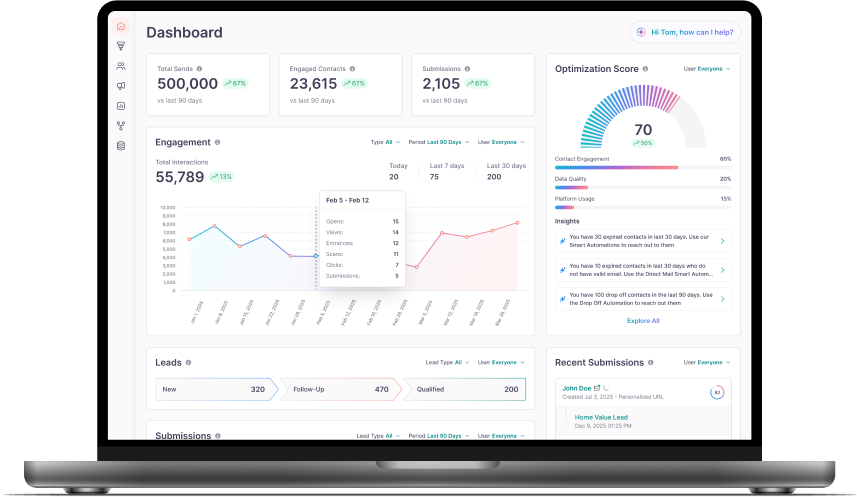
Fello gave the Laurie Finkelstein Reader Team a system for continuously identifying, prioritizing, and working seller opportunities from the database they already owned. That started with data: Fello enriched 40,000+ homeowners in the database, adding visibility into home values, equity positions, ownership changes, and seller-intent signals. The team could now see who was most likely to move, including contacts who had already sold with a competitor.
From there, the team rebuilt how their ISAs worked.
They stopped calling old lists with no behavioral context. They started calling engaged contacts daily, using specific call-to-action scripts tied to Fello signals. They built smart lists and workflows inside Follow Up Boss to prioritize seller conversations. And they shifted their entire ISA strategy away from Zillow and referral-based lead flow toward database-first outreach.
The ISA team did not shrink. It grew.
-1.png)
“I wouldn't feel comfortable hiring more ISAs if I didn't have the right people for them to engage with. I'm not going to continue to invest in ISAs to just call cold lists that we have no consumer behavior on.” - Camila Rivera, COO, Laurie Finkelstein Reader Team
That is the real product story. Fello did not reduce effort. It made the effort worth more.
The Results
Flat units. Better economics.
From 2024 to 2025, the Laurie Finkelstein Reader Team's unit volume was essentially flat. The financial difference came from where the business came from. More deals originated from their own database, which carries better commission economics for the team. Database-sourced business means the team keeps more of what it earns.
“I think the profit increase is the most important number." - Camila Rivera, COO, Laurie Finkelstein Reader Team
The attribution logic is simple.
Camila put it plainly: "If we didn't have those opportunities, we wouldn't have closed those deals." Fello created and surfaced the opportunity. The team closed it. That is the same way every real estate team thinks about any lead source.
Database-Sourced Listing Deals
46
More Deals, Same Database
+11%
Profit Growth, Flat Volume
+26%
Sales Volume Growth
+4.5%
Gross Commission Income
+7%
Listing-Side Transactions
+24%
Buyer-Side Transactions
+36%
Looking Ahead
The Laurie Reader Team is now in the Felix alpha. Early results include appointment setting at a pace the team is actively working to absorb. The operational challenge has shifted from "how do we find new leads and opportunities" to "how do we route and respond to the handoffs fast enough."
That is a different problem than most teams have. It is a better one.
The Bottom Line
The Laurie Finkelstein Reader Team did not hustle their way to better economics. They operated their way there.
They stopped chasing leads. They started working the ones they already had. They built a system that told their ISAs who to call, when to call, and why it mattered. And they shifted their focus from unit volume to profit per deal, from activity to economics.
Camila sums it up better than we ever could:
"Before Fello, we had a database. After Fello, we had a system." - Camila Rivera, COO, Laurie Reader Team
Unlock the profit in your business.